Mostrando entradas con la etiqueta Tourism. Mostrar todas las entradas

lunes, 12 de septiembre de 2011

Guía de Viaje de Ámsterdam / Amsterdam Travel Guide (II)

Perdón por la tardanza, pero afortunadamente tuve que acortar mis vacaciones, y digo afortunadamente porque me llamaron para trabajar, si Dios quiere, hasta final de curso. Así que aquí nos tenéis de nuevo juntas, pero no revueltas.

Sorry for the posting delay, but thankfully we had to cut short our holidays, and I say thankfully as I got a call to work, God willing, until the end of the school year so I'll be keeping my sister company again. So here we are again, together yet apart.

Seguimos con nuestra guía de viaje de Ámsterdam. Podéis leer la primera parte *aquí*.
Time to go on with our Amsterdam Travel Guide. You can read part one *here*.


Día 4:

Comenzamos el día visitando el museo de arte Rijksmuseum, que posee la más famosa colección de pinturas del Siglo de Oro holandés, conocidas como 'The Masterpieces' y que se exhiben en el Ala Philips: las casas de muñecas, la colección de plata y de porcelana de Delft. En lo pictórico, 'De Nachtwacht' de Rembrandt o 'La Lechera' de Vermeer son algunas de las obras más representativas. Recordad que 'La Joven de la Perla' no se encuentra allí, sino en Mauritshuis, en La Haya.

Seguimos con el Diamant Museum, el Museo del Diamante, que nos acerca a los aspectos más importantes de todo lo relacionado con esta piedra preciosa, haciendo especial hincapié en la industria de Ámsterdam. Hay una exposición permanente sobre diamantes y una réplica de 'La noche estrellada' de Van Gogh decorada con brillantes. Es un museo con un cierto aire interactivo: podéis intentar distinguir el brillante entre otras seis piedras más -yo lo conseguí a la primera, se ve que he nacido para rica- y haceros una foto con webcam y 'photoshopearla' con alguna corona, que podréis enviar a vuestros amigos desde el museo por e-mail.

Y si la visita al museo es interesante, todavía lo es más la visita a la fábrica de Coster Diamonds, justo al lado. Tras dejar vuestros datos personales a la entrada, podréis disfrutar de una visita guiada en grupo, disponible en varios idiomas, en la que os ayudarán a conocer mejor por qué una de estas piedrecitas puede llegar a costar tanto. Nuestro guía, Luis, logró condensar en unos diez minutos los aspectos más destacados de forma muy amena, enseñándonos algunas de las piezas más interesantes y los últimos avances. En la planta baja, podéis observar a los artesanos tallando y puliendo diamantes. Si vuestro presupuesto os lo permite, visitad el 'Outlet' con piezas de colecciones pasadas (en perfecto estado, ojo) y llevaros un recuerdo eterno de vuestro viaje a Ámsterdam. Ya sabéis aquello de que 'un diamante es para siempre'.

Decidimos terminar esta jornada tan museística en el otro museo de la zona, el Museo Van Gogh, que alberga la mayor colección del mundo de este artista: más de 200 cuadros, 500 dibujos y 700 cartas, así como su colección de grabados japoneses. También encontramos obras de pintores y artistas que inspiraron al 'loco' artista holandés.

La última parada del día puede resumirse en 'lo que pudo haber sido y no fue', en el apartado compras. Pero merece un post aparte.


Day 4:

Our day begins by visiting the Rijksmuseum, with the largest collection of the Dutch Golden Age paintings, as part of The Masterpieces. On display at the Philips Wing are the beautiful dolls' houses, silverware and the best Delftware. It houses the famous Night Watch by Rembrandt and The Kitchen maid by Vermeer. Remember that the Girl with a pearl earring is not found here but at the Mauritshuis in The Hague.

Our next stop is the Diamant Museum or Diamond Museum, showing the most important aspects of the diamond industry with special attention on the history of the diamond industry in Amsterdam. At a permanent exhibition, you can admire several famous diamonds and a replica of Van Gogh's 'Starry Night' studded with brilliants. The museum as a certain air of interactivity to it: you can try to tell the brilliant from other six stones -I spotted it on my first try, apparently I was born to be rich, you see - or have a webcam take a picture of you and then crown yourself with the help of some Photoshop, to finally e-mail it to your friends from the museum.

And if the visit to the museum is interesting enough, I encourage you to not miss the Coster Diamonds factory, right next door. After leaving your personal details at the entrance, you can enjoy a free guided tour in groups, available in several languages where you will know why these little stones are so precious and costly. Our guide, Luis, managed to sum up all the details in a short and enjoyable ten-minute visit, showcasing the most interesting pieces and informing us about the latest developments in the industry. You'll get to see the artisans at work, cutting and polishing diamonds. If you're not on a tight budget, you may even take a look at the Outlet shop, featuring pieces from past collections at reduced prices (in perfect condition, don't take me wrong) and bring an ever-lasting souvenir from your visit to Amsterdam. Diamonds are forever, after all.

We decided to finish this museum-packed day with the other important museum in the area, the Van Gogh Museum. The building hoses the world's largest collection of works by Vincent van Gogh. It consists of some 200 paintings, 500 drawings and 700 letters by Vincent van Gogh, as well as his collection of Japanese prints. Other works that inspired the 'crazy' Dutch artist can also be found here.

The last stop for us that day could be summed up into 'What could have been but wasn't' in the shopping department. But that's writing/ranting material for another post.


Día 5:

Comenzamos el día dando un pequeño paseo por Vondelpark, el parque más grande de Ámsterdam, con 48 hectáreas de extensión. Después, nos fuimos a echar un vistazo al Albert Cuypmarkt que funciona de 9 a 18 de lunes a sábado. Allí podemos encontrar telas, artículos de droguería, ropa y algo de comer. Con todo, nos decepcionó un poco: en España tenemos mercadillos mucho más grandes y muchos artículos tampoco eran nada del otro mundo.

Y seguimos con otro mercado, el Mercado de las Flores, abierto de lunes a sábado de 9 a 17 y los domingos de 11 a 17.30. El Bloemenmarkt se encuentra junto al canal Singel y sí que merece una visita. La variedad de flores, plantas y semillas es impresionante, aunque evidentemente los tulipanes tienen una mayor presencia. Los encontraréis en infinidad de colores y formatos de compra: bolsas de 10 y hasta de 100 bulbos, enlatados para poderlos llevar en vuestra maleta, en cajitas de cartón, etc. Y por vender, venden hasta 'kits de principiante' para quien quiera iniciarse en el cultivo de la planta de la felicidad ;-) . Otra cosa es que luego tengáis problemas en aduanas, puesto que a diferencia de Holanda, en el resto del mundo el cultivo de cannabis -aunque sea para consumo personal- está prohibido por ley.

La última parada del día fue el estadio del Ajax, aprovechando que no había mucho más que hacer -la gran mayoría de las tiendas a las 18 ya estaban cerradas. En los alrededores había un centro comercial muy enfocado a la decoración (con tiendas como Natuzzi) y fuera de él un edificio muy colorido con grandes cadenas como Decathlon, Media Markt y Prenatal, además del Heineken Music Hall.


Day 5:

Our day began with a short stroll around Vondelpark, Amsterdam's largest park with 48 ha. After that, we headed for the Albert Cuypmarkt that is open Mon-Sat from 9 to 18pm. The goods for sale include fabric, drugstore items, clothes and food. All in all, we were a bit disappointed, as we have larger street markets in Spain and most of the stuff at the Albert Cuypmarkt was nothing out of the ordinary.

And next we visited another market, The Bloemenmarkt which is the world's only floating flower market, located along the Singel canal. It is definitely worth a visit. It's open Mon-Sat from 9 to 17 and on Sundays from 11 to 17.30. The variety of plants, flowers and seeds is indeed astonishing, with a stronger presence of the famous Dutch tulips and bulbs. The colour range is endless and so are the formats for buying these: in bags of 10 to 100 bulbs, canned for easier transport on your luggage, in cardboard boxes, etc. They even have 'starter kits' for those who want to risk getting started with the plant of happiness ;-) . Please bear in mind that you may be in trouble at customs if you do, as the cultivation of cannabis plants -even on a small scale, for personal consumption- is against the law outside The Netherlands.

The last stop of the day was the Ajax Stadium. There was not much to do, as the majority of shops were closed at 18. Next to the stadium there was a Mall specialized in home décor -with stores like Natuzzi - and a colourful building outside housing specialized stores like Decathlon, Media Markt and Prenatal-Mothercare, as well as the Heineken Music Hall.


Día 6 (regreso):

Como nuestro vuelo de regreso no salía hasta la tarde (Iberia nos regaló un retrasito, cómo no) dedicamos la mañana a las últimas poticompras en las cercanías del hotel. Marian se encargará de iros enseñando nuestras compritas en próximos post.

Day 6 (departure): As our flight didn't leave until the evening (and was delayed courtesy of Iberia, no wonder) we spent the morning exploring the vicinity of the hotel for some last-minute make-up shopping. Marian will be showing you those over the next few days.

domingo, 11 de septiembre de 2011

Guía de Viaje de Ámsterdam / Amsterdam Travel Guide (I)

Como comentamos en la anterior entrada, hemos estado unos días fuera, en concreto en la bella Ámsterdam.

La ciudad de Ámsterdam es la capital oficial de los Países Bajos, aunque nunca ha sido la sede de la justicia, el gobierno o el parlamento holandés, que se encuentran en la ciudad de La Haya. Tiene una población de aproximadamente 750.000 habitantes, un millón y medio si contamos el área metropolitana.


¿Os gustan las bicis? ¡Pues váis a acabar hasta el moño de ellas!
Do you like bikes? Well, you'll be sick to death with them!

As mentioned in our previous post, we've been away for a few days. This time we visited the beautiful Amsterdam. Amsterdam is the official capital of The Netherlands, though it has never been the seat of the Dutch Courts, government or Parliament, all that being located in The Hague. It has a population of some 750,000 inhabitants or 1.5 million if you count the metropolitan area.

Cómo llegar (en avión) / How to get in (by plane)

El aeropuerto de Schiphol es el principal punto de acceso a la ciudad. Se encuentra a 3 metros por debajo del nivel del mar, lo que le convierte en el aeropuerto más bajo del mundo. Es el quinto aeropuerto con más tráfico de Europa, siendo utilizado cada año por unos 45 millones de personas, de las cuales un 40% lo hace en vuelos intercontinentales. Está situado a 15 km. de la ciudad.
Con lo poco que me gusta el aeropuerto de Madrid-Barajas, confieso que la disposición tan extraña del de Schiphol nos ha gustado aún menos. Nos costó enterarnos de dónde salíamos.

El recinto del aeropuerto cuenta con una estación de tren en el subsuelo que facilita la conexión con la estación central de la ciudad de Ámsterdam (Amsterdam Centraal), con una frecuencia de 15 minutos, y con las principales ciudades del país. Hay billetes de varias clases diferentes, y por eso hay que tener cuidado al elegir la opción. Se pueden adquirir tanto en máquinas expendedoras (ojo, la mayoría sólo aceptan el pago mediante tarjeta de crédito con chip, con recargo de 1€) o en la oficina de la estación.
Fue la opción que utilizamos para desplazarnos al centro de Ámsterdam. El billete de segunda clase nos costó 3,70€ por persona.
También podéis utilizar un billete para el autobús Connexxion Amsterdam, 10€ ida y vuelta.

Schiphol airport is the city's main gateway. It is 3 meters below sea level, making it the lowest airport in the world. As far as passenger traffic is concerned, it's Europe's fifth busiest airport and is used by approximately 45 million people every year, 40% of them travelling on intercontinental flights. It is located 15 kms from the city. As much as I hate Madrid-Barajas airport, we didn't like the layout of Schiphol airport at all. It took us some time to figure out which one was our departures hall and so on.

There's a train station underneath the airport complex, connecting it with the city centre (Amsterdam Centraal) every 15 minutes and with the country's main cities. There are several travel options to choose from, so be careful when buying your ticket. You can get those from the machine or from the ticket office at the station. Please note that most of the machines only offer payment by credit/debit card and only with those fitted with a microchip and at a 1 EUR surcharge.
It was the means of transport we used to get to downtown Amsterdam. The second class ticket was 3.70 EUR each. You can also use the Connexxion Amsterdam Tourist Ticket to get to the city centre. 10 € round trip.

Cómo moverse por Ámsterdam:

Amsterdam posee una buena red de transporte público, que comprende cuatro líneas de metro, además de numerosos tranvías y autobuses.
Si tenéis intención de visitar varias atracciones y moveros por la ciudad, puede ser una buena idea adquirir alguna de las variedades existentes (24, 48 y 72 horas) de la tarjeta I Amsterdam. Cuestan 39, 49 y 59 euros, respectivamente. Además de visitas a museos y otras atracciones, incluye una tarjeta aparte para utilizar la red de transportes local GVB. Las tarjetas vienen pegadas en un librito con información sobre la ciudad y la tarjeta.
Nosotras la compramos en la Oficina de Turismo, pero la podéis adquirir en muchos sitios más. Visitad el enlace para más información.

How to get around in Amsterdam:

Amsterdam has an excellent transport network, comprising four different underground lines, as well as many tramways and buses. If you plan on visiting several attractions and moving around town, getting one of the existing types -24, 48 and 72 hours) of the I Amsterdam tourist card is a good idea. They're 39, 49 and 59 EUR respectively. Apart from free entrance to many museums and other attractions, it has a separate card to be used in the local GVB transport network. Both cards come glued onto a booklet with lots of information about the city and the card itself. We bought ours from the Tourist Board office, but there are many other salespoints. Visit the link for more info.

Éste fue nuestro planning. Nos quedaron unos cuantos sitios por visitar, pero resultaba difícil exprimir los días al máximo cuando la mayoría -ya sean museos o tiendas- cierran a las 18.00 como muy tarde. Tenedlo en cuenta a la hora de planificar vuestra estancia en esta ciudad. Una pena, sobre todo porque en este tiempo, aún quedaban un par de horas de luz.

Día 1 (llegada): Nuestro vuelo de Iberia llegaba a Amsterdam a mediodía, por lo que nos dio tiempo a hacer un poquito de turismo nada más llegar. Tras registrarnos en el hotel y refrescarnos un poco, salimos a visitar la casa de Anna Frank. Al ser una fundación privada, la entrada no está incluída con la tarjeta IAmsterdam. La ventaja que tiene es que cierra bastante más tarde que el resto de museos y atracciones de la ciudad (abre de 9 a 22 h). La entrada cuesta 8,50€.

Our day-by-day itinerary was as follows. There were several places that we could simply not squeeze into our schedule and were forced to skip, due to the fact that most places in Amsterdam (museums and shops alike) close as early as 18.00 pm. Make sure you take that into consideration when planning your stay in Amsterdam. A pity, as they were still a couple of hours of daylight left.

Day 1 (arrival): Our Iberia flight arrived in Amsterdam at midday, so we had some time to do a bit of sightseeing straight away. After checking into our hotel and freshening up a bit, we went out to visit the Anne Frank House. Being a privately-managed institution, the entrance is not included with the IAmsterdam card. The good thing about this place is that it closes much later than the rest of museums/attractions in the city (from 9 to 22h). Admission is 8.50 EUR.

Día 2:
Tras comprar la IAmsterdam card, nos dirigimos al corazón del Barrio Rojo, conocido por sus escaparates de mujeres ejerciendo el oficio más antiguo del mundo y sus 'Coffee Shops' -famosos no por servir café, precisamente. No es un lugar que nos llamara especialmente, pero en pleno Barrio Rojo encontramos la Oude Kerk (L-S de 11 a 17.00), el monumento más antiguo de Ámsterdam. Entre sus principales reclamos, tenemos el órgano, las vidrieras y la tumba de Saskia, la esposa del pintor Rembrandt.

Después, nos dirigimos hasta Prins Hendrikkade 33a, punto de partida de los cruceros de la compañía Holland International, una de las compañías de cruceros por los canales que participan con la IAmsterdam card (vamos, que si os sacáis la tarjeta, os ahorráis 13€ por persona si escogéis ésta o Blue Boat Company).

Seguimos con una visita a pie por el centro de Ámsterdam: la plaza del Dam, que debe su nombre a su función original: una represa en el río Amstel. Está cerca de la Estación Central. En la plaza se encuentra también el Palacio Real, que está de nuevo abierto al público. En un extremo de la Plaza tenemos el Monumento Nacional, en memoria de las víctimas de la Segunda Guerra Mundial. Y para las que no tengan problemas para llegar a fin de mes, los grandes almacenes De Bijenkorf.


Y para reponer fuerzas después de tanta visita cultural y tanto andar, comimos en un restaurante del Centro Comercial Magna Plaza, en la Plaza del Dam.
Después, seguimos nuestra ruta hacia la Nieuwe Kerk (Iglesia Nueva), donde había una exposición de trajes de novia un tanto extraña (yo casi diría que un poco siniestra).

Day 2: After purchasing the IAmsterdam card, we headed for the heart of the Red Light District, famous for their shopwindows displaying women engaged in the world's oldest business and its 'Coffee Shops' -famous not precisely for their coffee. It's not a place that had any appeal to us, except for the fact that right in the heart of this neighbourhood we have the oldest monument in Amsterdam, the Oude Kerk, open Mon-Sat from 11 to 17. Its main attractions are the organ, the stained glass windows and Saskia's grave -Rembrandt's wife. After that, we headed for Prins Hendrikkade 33a, starting point for the Holland International canal cruises, one of the companies partnering with the IAmsterdam card (so if you get it, don't forget to choose either this company or Blue Boat Company and save €13 each).

We walked on to DamSquare, a popular meeting point. The Dam derives its name from its original function: a dam on the Amstel River, hence also the name of the city. It's near the Central Station. On one end of the square we have the Royal Palace, which is again open to visitors. The National Monument, a memorial to honour the victims of World War II dominates the opposite end. And for the lucky ones who don't struggle to make it to the end of the month. the upscale De Bijenkorf department store awaits you.


After having seen so many monuments and walked so much, we stopped to get our strength back at a restaurant in the Magna Plaza mall, at Dam Square.
Afterwards, we followed our route to Nieuwe Kerk (New Church), where we managed to see some kind of a bizarre exhibition of wedding dresses (and I'd say it was a little bit scary).

El día también dio de sí para hacer algunas poticompras. Ya os las iremos enseñando.
And we had time during the day for some make-up retail therapy. We'll show you what we got over the following days.

domingo, 24 de julio de 2011

Guía de Viaje de Tallin (Part 2) - Tallinn Travel Guide (Part 2)

Día 3:

Como pudisteis comprobar en la entrada anterior, mi segundo día me cundió mucho pero estaba agotada y ese día en especial necesitaba conservar las fuerzas y me lo tomé con más calma.
Había planeado visitar el Museo al Aire Libre de Estonia, pero quedaba lejos y entre que me lié con los buses y que no sabía cuánto iba a tardar en visitarlo, decidí visitar el zoo, que estaba algo más cerca.
Normalmente, no me da por visitar zoos, pero me pareció que podía ser una buena manera de pasar la mañana ya que la tarde, motivo principal de mi viaje, ya la tenía comprometida *mantengo la intriga, jeje*.

Day 3:

As you could tell from the previous entry, I got a lot done on my second day but I was completely knackered and this day in particular, I knew I would need to get all my strength back together, so I decided to take it easier.
I had planned to visit the Estonian Open Air Museum but partly because it was a bit far and also because I messed up with the buses and wasn't sure how long the visit would take, I decided to settle just for the zoo which was a bit closer.
I don't usually visit zoos, but I thought it could be a good way to spend the morning, as the afternoon/evening, the reason behind this trip, was already taken *I'll keep the suspense a bit longer, hehe*.

Zoo de Tallin (Tallinna Loomaaed):

El trolebús nº7 me lleva hasta el Zoo de Tallin en el que podemos ver animales procedentes de muchos rincones del mundo y otras criaturas más cercanas -como podéis comprobar en la curiosa foto que adjunto más abajo, jeje-. Tigres, yaks y hasta un oso polar que era toda una estrella (salía a posar para la gente como cada dos minutos) nos esperan en el parque zoológico de la ciudad de Tallin. Se encuentra bastante apartado (hay que salir a la autovía), por lo que no recomendaría ir hasta allí andando.


Tallinn Zoo (Tallinna Loomaaed):

Trolleybus no. 7 takes me to the Tallinn Zoo where you can see animals from many faraway places and others from not so far away -as you can see in the odd pic I'm uploading, lol-. Tigers, yaks and even a Polar bear which was quite a star and definitely not camera-shy (he would come out to pose before us like every two minutes) await us on Tallinn's city Zoo. It's quite far (you have to get into the highway), so I wouldn't recommend going there on foot.


*No me preguntéis cómo llegó este exótico animal, procedente de la República Checa, al zoo de Tallin.*
*Don't ask me how this strange creature, native to the Czech Republic, made it to Tallinn Zoo.*

Muy cerca del zoo encontramos el centro comercial más grande de Estonia, el Rocca al Mare, donde pasé un buen rato disfrutando de las tiendas. Ese día me porté mejor y sólo compré un par de cosillas. También comí en un restaurante italiano -da Vinci pasta & pizza- que había allí.

Very close to the Zoo we have Estonia's biggest shopping centre, the Rocca al Mare, where I spent some time just enjoying the different shops. I behaved better this time and only got a couple of things. I also had lunch at an Italian restaurant -da Vinci pasta & pizza -there.

Qué hice en el resto lo sabréis muy pronto, en una entrada especial.
What I did the rest of the day I'll reveal soon, on a special blogpost.

Día 4:

El día siguiente por desgracia amaneció lluvioso, así que también me lo tomé con calma.
The next day was a bit rainy, so I had no choice but to take it easy too.

Torre Epping (Eppingi torn):

De nuevo en la Ciudad Vieja, tenemos una nueva torre/museo, que nos ofrece información sobre las fortificaciones de Tallin, el armamento y las armaduras medievales. Los objetos expuestos ocupan un total de seis plantas de esta torre del siglo XIV. La visita se hace entretenida, ya que no se trata de una gran colección. Los visitantes pueden incluso probarse una cota de malla y una armadura o probar varias réplicas de armas medievales, aunque yo no me atreví.


Epping Tower (Eppingi torn):

Back in the Old Town, we have another tower/museum, providing some insight into the development of Tallinn's fortifications, medieval arms and armour. The objects are displayed on a total of six floors in this 14th-century tower. The visit is quite entertaining, as it's not a big collection.
Visitors can even try on a selection of chainmail and armour, as well as handling medieval replica weapons, though I did not dare to.


Palacio de Kadriorg (Kadrioru kunstimuuseum):

Este hermoso palacio era la residencia de verano del Zar Pedro el Grande, construido para su esposa Catalina y cuya construcción se encargó al arquitecto italiano Niccolo Michetti a principios del siglo XVIII. No os perdáis la hermosa biblioteca situada en el piso superior y decorada con los edificios más destacados de Tallin en marquetería.
Yo sólo visité el palacio en sí, no los edificios colindantes.


Kadriorg Palace and Museum (Kadrioru kunstimuuseum):

This beautiful palace was Peter the Great's summer residence, commissioned for the Tsar's wife, Catherine I and erected by Italian architect Niccolo Michetti in the early 18th century. Don't miss the magnificient library on the top floor, decorated in woodwork with Tallinn's landmark constructions.
I only visited the palace itself, not the surrounding buildings.


Al regreso, eché un vistazo al centro comercial Foorum, más pequeño que los anteriores (yo más bien diría que son unas galerías comerciales), donde no compré nada. Os debo post de las compras en Tallinn y hablaré de las distintas marcas que podemos encontrar allí, que ya os adelanto que son bastantes. Marian aún no ha visto lo que compré, así que supongo que estará deseando que lo haga.

On the way back, I had a look at the Foorum Shopping Centre, smaller than the previous two (I'd say it's just a shopping arcade, not a proper Mall), where I didn't buy anything. I owe you a post about my Tallinn haul and will talk about the different brands available there and let me just tell you they're quite a few. Marian has not seen what I got yet, so I guess she'll be eagerly waiting for that.

La tarde la dediqué a pasear un poco por la ciudad vieja. Quizá habría podido visitar algún museo más en este último día, pero considero que aún así mi visita a la capital de Estonia fue bastante fructífera.

I spent the evening wandering around the Old Town. I could have visited some more museums during my last day, but anyway I think my visit to Estonia's capital was quite fruitful all the same.

Me habría gustado visitar las ruinas del convento de Santa Brígida (Pirita kloostri varemed), algo alejadas del centro -y fijo que me pierdo, jeje- o aprovechar que únicamente durante dos de los días que pasé allí se podían visitar varios buques de guerra en el puerto de Tallin, cosa que sí hicieron algunos de los españoles con los que coincidí.

I would have liked to pay a visit to the ruins of St. Bridget's Convent (Pirita kloostri varemed), a bit far from the centre -I probably would have lost my bearings- or profit from the fact that only during two days of my stay one could visit some warships docked in Tallinn's harbour, which was a nice experience according to some of the Spaniards I met there.

En próximas entradas os hablaré del hotel, la comida... y las compras en Tallin.
In my next posts I'll write about the hotel, the food... and shopping in Tallinn.

sábado, 23 de julio de 2011

Guía de Viaje de Tallin (Parte 1) - Tallinn Travel Guide (Part 1)

La semana pasada hice una escapadita de cinco días a la capital de Estonia. De esos cinco días, cuatro los he dedicado a hacer turismo y algunas compritas. En qué ocupé el quinto día (bueno, en realidad fue el tercero), me lo reservo para una entrada aparte *¡qué intriga!*. Regresé antesdeayer, agotada pero encantada.
Se da la circunstancia de que este 2011 Tallin disfruta del honor de ser Capital Europea de la Cultura.
Como ya hiciera con Berlín, me propongo dedicar una serie de entradas a hablar de este destino.
En primer lugar, deciros que me ha sorprendido la cantidad de españoles (turistas y expatriados) que me he encontrado. Me gusta que la gente se anime cada vez más a conocer otros países.


Last week I did a short trip -five days- to the capital of Estonia, Tallinn. I devoted four of them to doing some sightseeing and shopping too. I'll write a specific entry for Day 5 -or Day 3, actually- *sneaky, lol*. I came back the day before yesterday, completely exhausted but definitely delighted with it. This year will be like no other for Tallinn, as it takes on its role as European Capital of Culture.
As I did with Berlin, I intend to write a series of posts about the place. First of all, let me tell you I was surprised by the number of Spaniards (both tourists and expats) that I've met there. I like the fact that people are starting to get out of their comfort zone and visit other countries.

Aunque viajaba sola, he tenido la suerte de coincidir con gente muy agradable con la que he disfrutado de lo lindo: Bea y Juan de Tarragona, Carolina de Canarias y su novio estonio, Eva y su marido alemán, etc.
A ratos, me daba la sensación de estar en España: lo largos que son los días animaban a quedarse en la calle e incluso salir de tapas.

Although I was travelling solo, I've had the good fortune of meeting some very nice people I've had a great time with: Bea and Juan from Tarragona, Carolina from the Canary Islands and her Estonian boyfriend, Eva and her German husband, etc.
At times, I had the feeling of being in Spain: the length of the days is conducive to staying out late and even have some tapas.

Aunque Tallin se está poniendo muy de moda como destino turístico para los españoles, tal y como pude comprobar, no encontré ninguna guía de viaje, así que tuve que recurrir a San Google para conseguir información sobre museos, plano y demás.

No me enrollo más y paso a hablaros de Tallin. Tallin es la capital de Estonia y del condado de Harju. Tiene 400.000 habitantes aproximadamente, sin dar la sensación de ser una gran ciudad. Se encuentra en la costa norte de Estonia y quizá es la gran desconocida de los países escandinavos. Está a 80 kms al sur de Helsinki, lo que hace que mucha gente se anime a hacer una pequeña escapada al otro lado del Golfo de Finlandia, gracias a las múltiples conexiones diarias que posee con Helsinki principalmente, aunque también con Estocolmo.
Su centro histórico u 'Old Town' fue declarado Patrimonio de la Humanidad por la UNESCO. Desde enero de 2011 utiliza el euro, así que si tenéis pensado escogerlo como destino de vacaciones, puede ser una ventaja a tener en cuenta respecto a otros países europeos.
Pero Tallinn no es una ciudad que vive del pasado, ya que de Estonia han salido avances tecnológicos como Hotmail o Skype. En Tallin es posible acceder a Internet de forma gratuita en muchos lugares mediante la red Wi-Fi. Yo misma, lo he usado todos los días desde mi hotel para mantenerme en contacto por correo electrónico y con el Blogger.
Como curiosidad os diré que no he visto una sola cabina de teléfonos en toda la ciudad. El uso de los teléfonos móviles está tan extendido que se pueden incluso adquirir tarjetas de prepago a recargar con el importe deseado para llamar a casa a precios más competitivos -eso sí, aseguraos de que vuestro terminal está liberado-.

Although Tallinn is becoming an increasingly popular place to visit for Spaniards as I could tell for myself, I did not find any travel guides for sale and had to engage the services of St. Google to find info about the city, its museums or a city map.

I'll stop jabbering on and tell you about Tallinn. Tallinn is the capital city of Estonia and also of Harju County. It has about 400,000 inhabitants, without giving the impression of being a big, imposing city. It is located on the north coast of Estonia and is probably the lesser known of Scandinavian countries. It lies 80 kms south of Helsinki, which is an excellent reason for making a short trip to the other side of the Gulf of Finland, thanks to the many ferry services available daily, linking Tallinn mainly to Helsinki but also Stockholm.
Tallinn's Old Town is in the list of UNESCO World Heritage Sites. As from January 2011, it has adopted the Euro as its currency, an advantage to be considered when compared to other European countries.
But Tallinn does not live on the past. Estonia has given the world many technological advances such as Hotmail or Skype. Wi-Fi is widely spread as I could witness myself: I could keep in touch via e-mail and check my Blogger updates everyday thanks to the hotel's free Wi-Fi system.
Trivia: I did not see a single phone booth while in Tallinn. Mobile phone use is so widespread that you can even purchase a pre-paid SIM card to call home at more competitive prices, as long as your terminal enables you to use cards from other providers.

Cómo llegar (avión):

No existen vuelos directos a la capital de Estonia. Yo viajé -por segunda vez y probablemente no la última- con la aerolinea checa CSA, que a diferencia de Iberia, ofrece servicio de catering (gratuito, se entiende) en todos sus vuelos. Tuve que hacer escala en Praga y el viaje exigió un madrugón de campeonato, ya que el vuelo de Madrid a Praga sale diariamente a las 7.10 de la mañana (y como no soy de Madrid, en mi caso supuso levantarme a la 1.30 de la mañana -vamos, que no dormí, me eché una cabezada después de cenar). Llegué a Tallinn a las 14.25 (hora local, en Tallin es una hora más que en España).
El aeropuerto de la ciudad, el Ülemiste / Lennart Meri se encuentra a 4 km de la ciudad y se puede ir andando incluso, ya que incluso el carril bici llega hasta allí. Yo utilicé un servicio especial de autobuses (Bus 90K) Aeropuerto/Centro/Aeropuerto, que sale a las horas en punto y media y que cuesta unos dos euros. Hace paradas en diversos puntos de la ciudad, cerca de los principales hoteles y estaciones de transporte. *El folleto no está actualizado, así que he escaneado el mío en dos archivos: 1/2 y 2/2*


How to get in (by plane):

There are no direct flights between Spain and Estonia, so for the second time (and probably not the last) I used the services of Czech Airlines aka CSA, which unlike the Spanish Iberia still offers free catering service on all their flights. The flight required a change of planes in Prage as well as an early start at quite an ungodly hour. Departure time was 7.10, but as I don't live in Madrid I was forced to get up at 1.30 am (didn't really go to bed, just took a nap after dinner). I arrived in Tallinn at 14.25 local time (1 hr + than in Spain).
The city's airport, Ülemiste / Lennart Meri is located 4 kms from the centre and you can even walk to it, as the road to it is pedestrian and biker-friendly. I used the shuttle service Airport/City Centre/Airport (Bus no. 90K) which leaves from the airport every full and half hour for about 2 EUR. It stops at several spots in the city centre, such as the main hotels or stations. *The shuttle brochure file is not up-to-date, so I've uploaded mine in two files, 1/2 and 2/2*.

Cómo moverse por Tallin:

La ciudad de Tallin carece de red de metro, aunque la red de autobuses, tranvías y trolebuses os llevará de una punta a otra de la ciudad si es necesario. Como ya os he comentado, mi sentido de la orientación es del todo inexistente y me costó pillarles el punto, aunque a poco mejor que a mí que se os dé, no tendréis ningún problema. Al igual que en Berlín, compré la tarjeta turística Tallinn Card de 72 horas en el hotel. Me costó 40€. Quizá no la amorticé tanto como en Berlín, ya que al ser una ciudad más pequeña, el transporte público no lo usé tanto.
La Tallinn Card lleva una banda magnética, por lo que en algunos sitios (museos) tendréis que introducirla en un lector especial, o bien lo harán en la taquilla por vosotros.


How to get around in Tallinn:

The city of Tallinn does not have an underground network, though the bus, tramway and trolleybus system will take from one side to the other if necessary. As I've mentioned before, my sense of direction is utterly and completely nonexistent and took me a while to get the hang of it, so if you do only a little better than me in that department, you'll have no problem at all.
Just like in Berlin, I bought the card developed by the Tourist Board. I got the 72 hour-Tallinn card for €40 from the hotel. I may not have milked this one as much as we did in Berlin, since the city's smaller size implied using public transport less often.
The Tallinn Card has a magnetic band on the back, so in some places (museums) you will have to insert it on a teller or the person at the ticket office will do it for you.


*Si sois como yo, estaréis deseando encontraros con alguno de estos.*
*If you're like me, you'll be very eager to find one of these.*

Me suele gustar planificar un poco mi estancia, así que esto fue lo que hice en esos cinco días.
I usually like to plan my stay, so this is what I did on those five days.

Día 1 (llegada):

Tras refrescarme un poco, salí a dar una vuelta por el centro histórico.
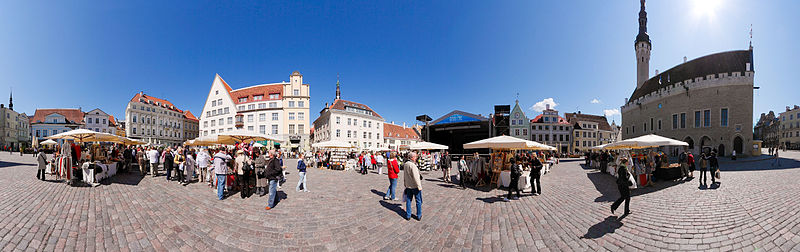
La plaza Mayor o del Ayuntamiento, Raekoja Plats es parada obligada. Allí veréis el ayuntamiento gótico mejor conservado del norte de Europa o la farmacia más antigua de Europa, que data de 1422 y que todavía hoy, sigue en funcionamiento. Es un lugar con mucha vida, lleno de restaurantes típicos -con precios acorde a su situación- y un punto de encuentro para los lugareños.
Me fui familiarizando con los distintos monumentos, cuya visita dejé para los siguientes días, ya que aún no había comprado la TC.


Fuente/Source: Wikipedia (Creative Commons)

Day 1 (arrival):

After freshening up a bit at the hotel, I went for a walk into the Old Town.
The Main Square or Town Hall square, Raekoja Plats is a must-see. You'll find the best preserved town hall in the gothic style in Northern Europe or the oldest pharmacy in Europe, dating as far back as 1422 and still open today. It's a place full of life, with lots of bars and restaurants in the vicinity -with prices usually befitting their priviledged situation- and a meeting point for locals.
I got familiar with the different sights but did not visit them, as I had not purchased my TC yet.

Día 2:
De vuelta a la Plaza del Ayuntamiento, visité la torre del Ayuntamiento o Raekoja torn. Es uno de los símbolos de la ciudad, con su torre octogonal de estilo gótico y 64 metros de altura. Está coronada por una veleta con la figura de Old Thomas.
Desde allí, y tras una subida por una estrechísima escalera de enormes escalones (no os sorprendáis si al día siguiente tenéis unas agujetas de campeonato, como fue mi caso) podréis disfrutar de una hermosa vista de la ciudad vieja. El observatorio es muy pequeñito, recuerdo que sólo estábamos yo y una madre e hija rusas y sinceramente, no creo que hubiera cabido nadie más.


Lástima de pintada / Pity about the vandalized info board.

Back to the Town Hall square, I went up the Town Hall Tower or Raekoja torn. It is one of the city's symbols, with its 64-metre, octagonal, Gothic tower. It is topped by another important symbol of the town, the Old Thomas weather vane.
From there, and after climbing a long, narrow and steep staircase you can have some truly amazing views of the Old Town. Don't be surprised if you have sore muscles from the climb over the next days, as was my case. The observation deck is really tiny, I remember it was just me and a Russian couple, mother and daughter and honestly, I doubt it could have accomodated a fourth visitor.

Museo Niguliste
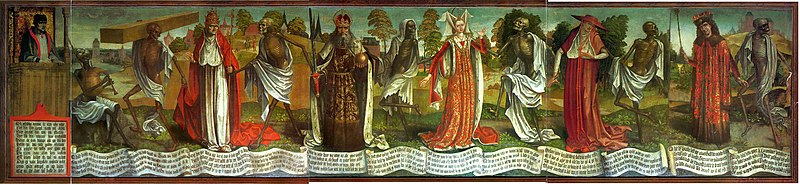
La iglesia de San Nicolás, del siglo XIII alberga un museo dedicado al arte religioso, con altares, lápidas y piezas ceremoniales de los distintos gremios, así como la obra pictórica más famosa de Tallin, la escena de la Danza Macabra o Danse Macabre ("Surmatantsu" en estonio), obra del artista del siglo XV Bernt Notke. No está permitido hacer fotos en su interior.


Fuente /Source: Wikipedia (Creative Commons)

Niguliste Museum
St. Nicholas Church, dating from the 13th century, houses a museum dedicated to church art, displaying medieval burial stones, altarpieces and Tallinn's most famous painting, 15th-century artist Bernt Notke's Danse Macabre (Dance with Death), as well as ceremonial items from Tallinn's medieval craft and merchant guilds. Photos are not allowed inside.

Catedral de Alexander Nevsky
Majestuosa catedral ortodoxa de Tallin, construida en 1900 cuando el país formaba parte del imperio ruso. Corona la colina de Toompea.
Los estonios la consideraban un símbolo de la opresión rusa e incluso estaba prevista su demolición, que finalmente no se llevó a cabo por falta de fondos. Como la URSS era oficialmente un estado laíco, este y otros muchos templos estaban muy abandonados. Esta Catedral ha sido meticulosamente restaurada desde que Estonia se independizara de la Unión Soviética en 1991.
No está permitido hacer fotos en su interior. Yo la visité en domingo y había culto, pero si sois respetuosos y discretos, nadie os dirá nada. Cuando la visitó esta pareja de Tarragona, me contaron que cierto turista se puso a sacar fotos a pesar de que hay varias señales que indican su prohibición y tuvo que llamarle la atención una anciana que estaba siguiendo el culto.


Alexander Nevsky Cathedral
This magnificient orthodox temple, was erected in Tallinn in 1900 when the country was still under the Rusian Empire ruling. It crowns the hill of Toompea.
Estonians regarded this as a symbol of the Russian oppression and was scheduled for demolition, but they never did due to lack of funding. As the USSR was officially non-religious, many temples including this cathedral were left to decline. The church has been meticulously restored since Estonia regained independence from the Soviet Union in 1991.
Pictures are not allowed inside. I visited it on a Sunday and a service was being held, but if you're respectful and discreet, no one will say anything. This couple from Tarragona told me that when they did, some tourist started snapping pictures despite the many signs forbidding it and this old lady following the Mass had to tell him off.

Kiek in de Kök (Un vistazo a la cocina, en bajo alemán, sobrenombre que se daba a las torres)

Esta gran torre situada en la ladera de la colina de Toompea antaño fue de gran importancia estratégica, manteniendo a salvo a Tallin de sus enemigos. Ahora alberga un museo dedicado a la defensa de la ciudad, en el que se exponen desde cañones a armamento y una amplia colección de fotografías. Hay un café en la última planta y muy buenas vistas desde la mayoría de las ventanas.
En su interior suelen celebrarse pequeños recitales. Se permiten fotos previo pago de una licencia (no llegó a 1€).


Kiek in de Kök (low German for 'Peep into the kitchen', a nickname for towers at the time)

This massive tower situated on the slopes of Toompea hill once played a vital role in keeping Tallinn safe from its enemies. It now houses a museum depicting anything from canons and military equipment to a large collection of photographs. There's a cafe on the upper floor and great views from most windows.
It sometimes holds small recitals. Photos are allowed inside, as long as you get a license (less than €1).

Museo Marítimo de Estonia (Eesti Meremuuseum)

La torre de Margarita la Gorda (Pax Margareta) acoge un museo de cuatro plantas sobre la historia naval de Estonia con piezas muy interesantes como útiles de pesca del Neolítico o primitivos equipos de buceo. Subid al tejado y disfrutaréis de una estupenda panorámica del puerto y de la Ciudad Vieja.


Estonian Maritime Museum (Eesti Meremuuseum)
The historic Fat Margaret cannon tower houses a four-storey museum covering the sea-faring aspect of Estonian history, with some interesting items such as Neolithic fishing gear or primitive diving equipment. Take the stairs to the roof for a picture-postcard view of Tallinn's harbour and the Old Town.

Iglesia de San Olaf (Oleviste kiriku torn):

Esta imponente iglesia del siglo XIII llegó a ser el edificio más alto del mundo. Si aún os quedan fuerzas después de la subida a la torre del ayuntamiento, podéis subir a su torre para disfrutar de unas vistas a toda la Ciudad Vieja, la colina de Toompea y el puerto que os dejarán sin aliento, no aptas para personas con vértigo. El mirador es más grande pero estrechísimo, tanto que hay que caminar en fila india y apoyándose en las planchas metálicas de la propia torre. La subidita es aún peor que la de Raekoja torn.
Por desgracia, las pilas de mi cámara dijeron basta justo cuando llegué arriba, deseando capturar el momento. ¡¡No veáis qué rabia me dio, después de la subidita!!

St. Olaf's Church Tower (Oleviste kiriku torn):

This impressive 13th-century church was once the tallest building in the world. If you still have some energy left after the climb to the Town Hall tower, you can climb to the top and be rewarded with a magnificient and dizzying view of all of Old Town, Toompea hill and the harbour.
The observation deck is bigger than that of the Town Hall tower but really narrow, having to walk in single line and using the tower's metal structure as hand-support. The climb is even more vigorous and a lot more hard than that of Raekoja torn.
Unfortunately, my camera batteries said enough just as I reached the top, ready to capture the moment. I felt so pissed off, after such a hard climb!!


Y como no sólo de museos vive Marox, pues dediqué el resto de la tarde a visitar el Viru Keskus, un enorme centro comercial justo al lado de la Ciudad Vieja. Y sí, me dejé un dinerillo allí. De las compras de Tallin pensaba hablar en un post específico.

And as Marox cannot live by museums alone, I devoted the rest of the afternoon/evening to a visit to Viru Keskus, a huge shopping centre right next to the Old Town. And yes, I did spend some money there. I'll write a specific post about my Tallinn haul.

¿Conocéis esta hermosa ciudad?
Have you ever been to this lovely city?

jueves, 28 de abril de 2011

De turismo por España - Visit Spain: Atapuerca (II)

Tras visitar los yacimientos de Atapuerca y reponer fuerzas en el restaurante Como Sapiens, tal y como podéis leer en la anterior entrada, el autobús nos traslada al siguiente punto de interés de nuestra visita: el parque arqueológico.

La visita comienza a las cuatro de la tarde, después de comer. El parque arqueológico consiste en un recinto con un pequeño recorrido en el que Carolina, nuestra guía, nos explica de forma práctica aspectos de la vida diaria de nuestros antepasados: cómo vivían, cómo cazaban, cómo fabricaban sus herramientas y finalmente, los distintos métodos que existen para hacer fuego.

Llegados a este punto, me parece propio destacar la gran labor que realizó nuestra guía, respondiendo en todo momento a nuestras dudas y con una forma muy amena de explicar todos estos aspectos. Recuerdo que durante la visita a los yacimientos nos cruzamos con otro grupo cuya guía parecía que les estaba recitando un discurso aprendido de memoria y de mala gana.

Soy consciente de que realizar un día tras otro la misma labor no debe de ser tarea fácil y de que no todo el mundo posee buenas dotes comunicativas.

Carolina demostró una paciencia infinita, especialmente con un grupo de niños bastante inquieto y 'movido', a los que se metió en el bolsillo sin problemas, dejándoles participar en varias actividades sencillas, como la demostración de las técnicas de pintura rupestre.

En algunos casos, estuvo ella más pendiente de los niños que sus propios padres.


http://www.youtube.com/watch?v=KYSqGGcp7w4

We are driven to the archaeological park right after lunch at the Como Sapiens restaurant, as mentioned in the previous entry. The visit begins at 16.00. The park is an exhibition site with a short circuit in which our guide, Carolina, went through several aspects of the daily lives of our ancestors by means of practical demonstrations: how they lived, how they hunted, made their own tools and finally the different methods to light a fire.

I'd like to emphasize the great job she did, answering all our questions and doing so in a most entertaining way. I remember meeting briefly other group of visitors at the archaeological sites whose guide seemed to have learnt some terribly boring speech by heart and with little interest in making herself understood. She made our visit very entertaining.

I'm well aware that performing the same task all day, every single day is not an easy thing and that not everyone has good communication skills.

Carolina exercised great patience, particularly with a group of young children who were both quite curious and restless and had no problem in getting them to eat out of her hand allowing them to volunteer and playing an active role in some simple and harmless demonstrations, like the cave painting techniques.

In a couple of occasions she paid more attention to what the kids were up to than their own parents.


Terminamos la visita al parque arqueológico poco antes de las 18.00 y regresamos a Burgos para visitar por fin el museo, cada uno a nuestro aire.

Mi hermana y yo tuvimos la inmensa suerte de tener una guía personal dentro del mismo, ya que conozco a una de las guías, Rosana, a la que nunca podremos agradecer lo suficiente que viniera ex-profeso en su día libre para enseñárnoslo. Gracias a ella pudimos contemplar las piezas más destacadas del museo: el cráneo de Miguelón, la pelvis 'Elvis', el bifaz 'Excalibur' que no fue utilizado jamás, sino que fue probablemente uno de los primeros obsequios funerarios del mundo.

Pero el Museo de la Evolución Humana no sólo alberga restos humanos, también dispone de diversos restos de animales de lo más variado que poblaron nuestro país hace miles de años -nutrias, leones, elefantes. Cuesta imaginar que en algún momento estos animales que en muchos casos ya ni siquiera viven en el continente europeo pudieran recorrer la Sierra de Atapuerca.


The visit to the archaeological park ended shortly before 18.00 and we returned to Burgos to visit the museum at last, on our own.

My sister and I were fortunate enough to have our own personal guide within the museum, since I happen to know one of the guides there, Rosana, whom I may never be able to thank enough for coming to meet us at the museum to give us a guided tour when she was off-duty. She guided us through the most interesting pieces: the cranium of Miguelón, the pelvis nicknamed 'Elvis', the 'Excalibur' biface -which was never used and was most likely the first funerary offering in history.

The Museum of Human Evolution does not only house human remains but a wide range of animal remains that once roamed Spain freely thousands of years ago – otters, lions, elephants, etc.

It's hard to imagine that these animals, which in most cases do not even inhabit the European continent anymore, could once be found at the Atapuerca Mountains.


La colección del museo es amplísima y si sois de los que os gusta deteneros a leer los carteles informativos, hacer fotos tranquilamente y demás, os darán las ocho (hora de cierre del museo) y no habréis visto ni una cuarta parte. En ese caso, sería quizá recomendable ver el museo otro día con más tiempo -los miércoles por la tarde es gratuito. Os aseguro que nosotras tuvimos que verlo en tiempo récord, dándonos prisita en ver las piezas.


The museum's collection is vast and if you like stopping to read every single information sign, take your time to take some photographs and stuff, the clock will strike eight and you won't have seen even a fourth of what's on display. If that is the case, maybe it would be a good idea to come back on a different day with more time -Wednesday afternoon admission is free. One thing I can tell you is that my sis and I had to see it in record time, rushing from one piece to the next.

¿Hay algún rincón de vuestra tierra que aún no conozcáis?

Is there any off-the-beaten-path spot in your homeland that you don't know yet?

miércoles, 13 de abril de 2011

De turismo por España - Visit Spain: Atapuerca

Esta nueva entrada procede de una reflexión que seguro os habéis planteado en alguna ocasión. Para mucha gente, entre la que me encuentro, la palabra vacaciones evoca otras como 'aeropuerto', 'pasaporte' o 'hacer las maletas'. Me encanta viajar y en mis vacaciones suelo escoger siempre que puedo destinos internacionales, ya que así tengo la sensación de que 'desconecto' más. Lo malo de ésto, es que dejamos de conocer rincones interesantes o de gran relevancia dentro de nuestro país.

In this post I'll be dealing with an idea you have probably given some thought to at some point. For many people, me included, the word holiday brings others like 'airport', 'passport' or 'packing' to mind. I love travelling and I tend to go for destinations abroad as I get the feeling that I can 'unwind' better that way. The downside to this is that we may fail to know many interesting spots within our own country.

Esta visita la teníamos en mente desde hacía tiempo, pero lo habíamos ido dejando por una serie de cuestiones: problemas de agenda, mal tiempo, la lista de espera para visitarlo, etc. Pero hace un par de semanas, digamos que la suerte se puso de nuestro lado y de lo único que tuvimos que preocuparnos fue de estar en la entrada del Museo de la Evolución Humana (MEH) de Burgos ya con nuestra reserva hecha para visitar el propio museo, los yacimientos y el parque arqueológico -es decir, la 'experiencia completa'. Corresponde a la 'entrada combinada' y cuesta 16 € por persona.


We'd had this visit in mind for some time but had been putting it off for a number of reasons: bad timing, bad weather, long waiting list, etc. But a couple of weeks ago, let's just say that fortune was on our side and the only thing we had to worry about was being at the entrance of the Museum of Human Evolution (MEH in Spanish) in Burgos at the designated time with a pre-booked visit to the museum itself, the archaeological sites and the archeological park -that is the whole 'Atapuerca experience'. It corresponds to the combined ticket and is €16 per person.

La Sierra de Atapuerca se encuentra situada al norte de Ibeas de Juarros, en la provincia de Burgos, dentro de la comunidad castellanoleonesa. Ha sido declarada Patrimonio de la Humanidad por la gran cantidad de restos arqueológicos de todo tipo allí encontrados, hecho que se explica en parte por su privilegiada situación geográfica. Forma parte del Corredor de la Bureba, en el que confluyen los ríos Ebro y Duero, dos de los grandes ríos de España. Vamos, que para los antiguos pobladores, la región era un 'caramelito'.

The Atapuerca Mountains are located north of Ibeas de Juarros, in the Burgos province and the Castile-León region in northwest Spain. It has been designated a UNESCO World Heritage Site due to the richness of archaelogical remains, both human and animal found there. This is mainly the product of their priviledged location. They're part of the Bureba pass, connecting the Ebro and the Duero (or Douro) rivers, two of Spain's major rivers. In other words, it was the 'in' place to go for the ancient settlers.

Lo primero que tuvimos fue la visita guiada a los yacimientos. La visita a los mismos se realiza mediante un servicio de 'lanzaderas' que el museo pone a disposición de los visitantes de martes a domingo, varias veces al día. Nuestra lanzadera salía a las 12.15 del museo, donde una vez 'pasada lista', nuestra guía, Carolina, comenzó a explicarnos en qué consistiría la visita. El traslado a los yacimientos lo realizamos en este autobús-lanzadera, salvo varias personas que viajaban con niños pequeños -y sus correspondientes sillitas y demás- y nos siguieron con su coche.

The first thing we had was a guided visit to the archaelogical sites. This is done by means of a shuttle coach service or 'lanzadera' offered by the Museum from Tuesday to Sunday, several times a day. Our shuttle service left at 12.15 from the Museum where our guide for the day, Carolina, began to explain what the visit would entail once she checked everyone was present. Everyone accessed the site by coach, except for a family travelling with small children (and their corresponding prams/strollers) who followed our bus there.

Una vez en los yacimientos y tras ponernos un casco protector -obligatorio por motivos de seguridad-, Carolina nos explicó dónde se habían encontrado los distintos restos, cómo se realizan las excavaciones, cómo era la vida en el asentamiento de Atapuerca, las herramientas que utilizaban y los distintos métodos de fabricación, en qué se diferenciaban anatómicamente de nosotros los primeros homínidos, etc.


Once at the site and after putting on a helmet -compulsory for safety reasons-, Carolina explained to us where the different remains were found, how digging is carried out, what life was like at the Atapuerca settlement, the tools used by these early hominins, the different methods used to make them and what made them different from us anatomically speaking, and so on.

Que sepamos, la visita a los yacimientos y al parque arqueológico sólo está disponible en español, un punto en contra para una ciudad que aspira a ser capital europea de la cultura en 2016. El museo sí que dispone de audioguías y folletos en español, inglés y francés.

As far as we know, the visit to both archeological sites and park is only available in Spanish, a 'con' against a city that aims to be European Capital of Culture in 2016. The museum does have audioguides and brochures in several languages: Spanish, English and French.

Aquí nos explican por primera vez la importancia de algunos de los restos que luego visitamos en el museo: el bifaz Excalibur, una pelvis completa apodada 'Elvis', el cráneo de 'Miguelón' -bautizado en honor al ciclista español Miguel Induráin, que ganó su segundo Tour de Francia el mismo año en que fue hallado – de unos 400.000 años de antigüedad, siendo el cráneo de Homo Heidelbergensis más completo que se conserva, hecho que mereció ser portada de la prestigiosísima revista Nature y que volvería a repetirse con el hallazgo de un fragmento de mandíbula, que sitúa la presencia humana en España mucho antes de lo que se pensaba.

For the first time we're explained the importance of some of the remains we'll later see at the museum: the Excalibur biface, a complete pelvis nicknamed 'Elvis', the cranium of 'Miguelón'- thus nicknamed after the Spanish road cyclist Miguel Induráin, who won his second Tour de France the same year this was found – considered to be 400,000 years old and the most complete skull of a Homo Heidelbergensis ever found, a discovery that deserved making it to the cover of the über-prestigious Nature magazine. This feat was repeated several years later with the find of a mandible fragment that put humans in Spain earlier than it was believed until then.

Son las dos de la tarde aproximadamente y el autobús nos lleva al pueblo de Atapuerca para comer. Cada semana, la lanzadera realiza esta parada en un sitio distinto: una semana en el pueblo de Atapuerca y la siguiente en el pueblo de Ibeas. De este modo, las dos localidades pueden beneficiarse por igual del turismo que recibe la zona gracias a los yacimientos.

Atapuerca dispone de varios restaurantes y nosotras elegimos el Como Sapiens, un antiguo pajar transformado en un pequeño establecimiento con mucho encanto.


It's around 2.00 pm and our bus takes us back to the village of Atapuerca for lunch. Every week the shuttle service stops at a different place: one week at Atapuerca and the next at Ibeas. In this way, both villages can benefit from the tourism the archaelogical sites attract.

Atapuerca offers several restaurants to its visitors and we went for the Como Sapiens, a charming renovated straw loft.

Es posible comer 'a la carta' o bien aprovecharse de un menú especial creado para los visitantes por 25 €. Si bien el precio no entra dentro de la categoría 'barato', el precio incluye tres platos para elegir como entrantes, plato principal y postre además de pan, vino/agua y café. Nos gustó mucho lo que pedimos y nos pareció que el precio se ajustaba a la calidad de los platos y del servicio recibido. No tuvimos que esperar, por lo que nos dio tiempo a comer a tiempo para reunirnos con el resto de los visitantes a las 16.00 para continuar la visita.

You can either eat 'à la carte' or benefit from the set menu specially created for visitors. At €25 it may not qualify into the 'cheap' label but for that price you can choose from three different starters, main courses and desserts and wine/water, bread and coffee are included on the price, which is very nice. We enjoyed what we ordered very much and the quality of the dishes and the service received was in line with that price. We didn't have to wait to be served and had enough time to have lunch before meeting the rest of our group at 16.00 to continue the visit.

Aparte de lo que habíamos pedido, nos obsequiaron con un aperitivo para ir 'entreteniendo' el estómago, aunque como digo, el servicio fue muy rápido. El aperitivo era unos vasitos de sopa castellana templada, muy rica. En lo demás, la elección tanto mía como de mi hermana fue la misma: como entrante, una riquísima ensalada con queso de cabra con rúcula y lechuga roja, pipas de girasol y salsa de 'aceto balsámico' y de frutos rojos. He intentado hacer en casa algo parecido con lo del queso de cabra pero no lo he conseguido.

Apart from what we ordered, we were given a delicious appetizer to keep our empty stomachs 'busy', two small glasses of Castillian garlic soup though, like I said we didn't have to wait long. As for the rest, both my sister and I ordered the same: for starters, a yummy salad with rucola and red lettuce, grilled goat's cheese, sunflower seeds with a dressing of balsamic vinegar and red berries. I tried to replicate the grilled cheese thing at home but didn't quite get it.


De segundo, nos pedimos una lubina a la plancha acompañada de una mousse de aceituna negra. Deliciosa también, mi hermana que suele comer poco pan acabó con él para tomarse la mousse en plan canapé. Y de postre otra mousse, ésta de yogur con frutos rojos, seguido de una infusión de menta poleo para tener una buena digestión, jeje.

For main course, we had grilled sea bass garnished with some black olives mousse. Again so delicious that even my sister who does not usually eat bread with lunch ate it all up because she spread the mousse on it. For dessert we had another mousse, a yoghurt mousse with red berries and had a hot cup of mint tea to help let our food go down, hehe.

En la segunda parte, os hablaré de la visita al parque arqueológico y al museo en sí. Puedes leerla aquí.

In the second installment I'll write about the visit to the archaelogical park and the Museum itself. You can read it here.

Related Posts Plugin for WordPress, Blogger...